The Ritual of Slow Tea
Most cups of tea are made while something else is happening.
The kettle boils while we answer a message. The tea steeps beside an open laptop. We take the first sip only after it has already started to cool, then forget the cup somewhere between one task and the next.
There is nothing wrong with drinking tea this way. Sometimes tea simply needs to be warm, quick and within reach. But when you give the process a little more attention, the same cup becomes something else entirely.
A slow tea ritual is not about complicated rules or rare equipment. It is about allowing one ordinary action to have your full attention.
Why does slow tea feel different?
Tea asks you to wait. The water has to heat. The leaves need time to unfold. The temperature needs to settle before you can drink comfortably.
We usually treat that waiting as wasted time and reach for our phones. But the pause is part of the experience. It creates a natural break between what came before and whatever happens next.
You begin to notice small things. The sound of water entering the pot. The first trace of steam. The colour changing as the leaves release their flavour. None of this is particularly dramatic, and that is precisely the point.
Not every meaningful moment has to be a big one.

Choose a tea for the moment
A slow tea ritual begins with choosing what you actually feel like drinking, rather than automatically reaching for the same tea every time.
Black tea has a fuller character and suits mornings or afternoons when you want something warm and grounding. Zelyth’s Organic Chai Black Tea adds aromatic spices to that familiar depth, making it particularly comforting on colder days.
Green tea usually feels lighter and more delicate. The Serenity Souk Green Tea works well when you want a softer pause that does not feel too heavy.
You do not need to choose tea according to a strict schedule. Drink green tea in the afternoon or chai in the morning. The best choice is the one that fits the moment you are actually having.
Your slow tea ritual starts before the first sip
Begin by putting away whatever does not need to be involved. You do not have to switch off every device in the house, but try leaving your phone outside arm’s reach.
Fill the kettle with fresh water and prepare your tea while it heats. Notice the leaves and their scent before adding water. This small pause helps separate the ritual from the automatic process of making another drink.
Follow the preparation instructions for the tea you have chosen. Water that is too hot can overwhelm more delicate leaves, while insufficient steeping may leave stronger teas tasting thin. You do not need to become scientific about every cup, but temperature and time genuinely change the result.
Then let the tea steep without trying to fill those minutes.


The vessel changes the experience
Technically, tea tastes like tea whether it comes from your favourite cup or a chipped mug beside the sink. Emotionally, it is not quite the same.
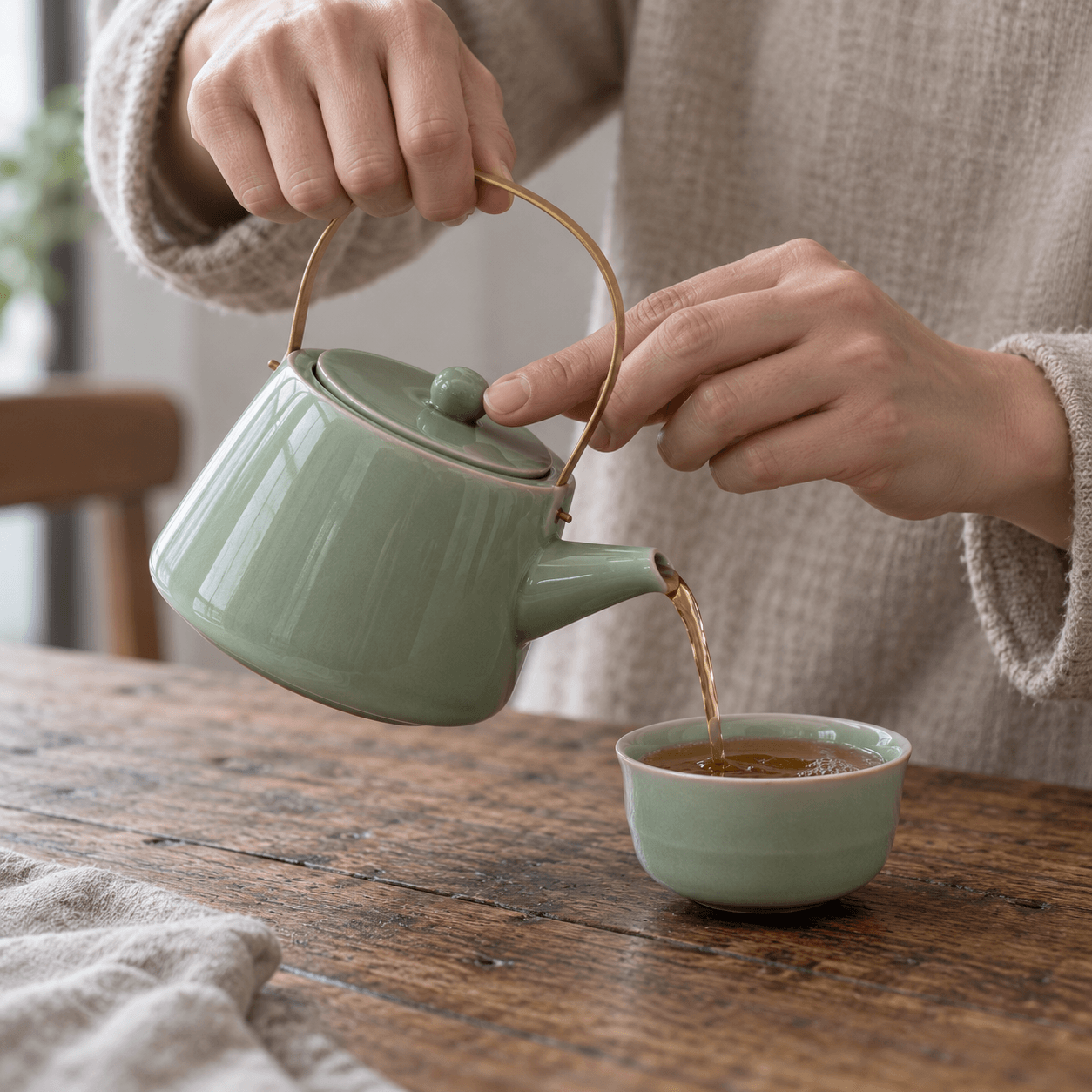
The objects we use influence how much attention we give a moment. A teapot asks us to sit down. A smaller cup makes us pour more deliberately. A tray keeps everything together and turns the act of drinking tea into something with a beginning and an end.
The Jade Teapot Set is a compact choice for quiet moments at home. Its smaller format encourages slower pours and makes sharing tea with one other person feel more intentional.
For tea outside the home, the Mountain Travel Tea Set keeps the ritual portable. Take it into the garden, on a quiet afternoon away or somewhere with a view worth sitting still for.
Beautiful objects are not essential. They simply remind us that an everyday action is worth experiencing properly.
Drink the first cup without distraction
You do not need to spend an hour in complete silence. Start with the first cup.
Notice the temperature before tasting it. Pay attention to the first flavour and the one that remains after you swallow. See whether the second sip tastes the same as the first.
If your mind wanders, let it. This is tea, not a concentration exam. Return to the cup when you notice that your thoughts have moved elsewhere.
The aim is not to empty your mind. It is simply to be present for something you would normally do without thinking.
Make room for imperfection
Online rituals often look suspiciously flawless. The table is empty, the lighting is perfect and nobody seems to own a charging cable.
Real life is rarely that well arranged.
Your tea ritual can happen at a kitchen table with unopened post in the corner. It can last eight minutes before work or take place under a blanket while the washing machine runs. You can forget the steeping time, spill a little water and still enjoy the result.
A ritual does not become meaningful because it looks beautiful. It becomes meaningful because you return to it.
Create a ritual you can repeat
If you want slow tea to become part of your routine, give it a recognisable place in your day.
It might be the first drink after lunch. The moment work ends. A Sunday morning before anyone expects anything from you. Choose a time that already contains a small opening rather than forcing an entirely new routine into a full day.
Keep your tea and the things you use together. When everything is easy to reach, the ritual feels inviting rather than inconvenient.
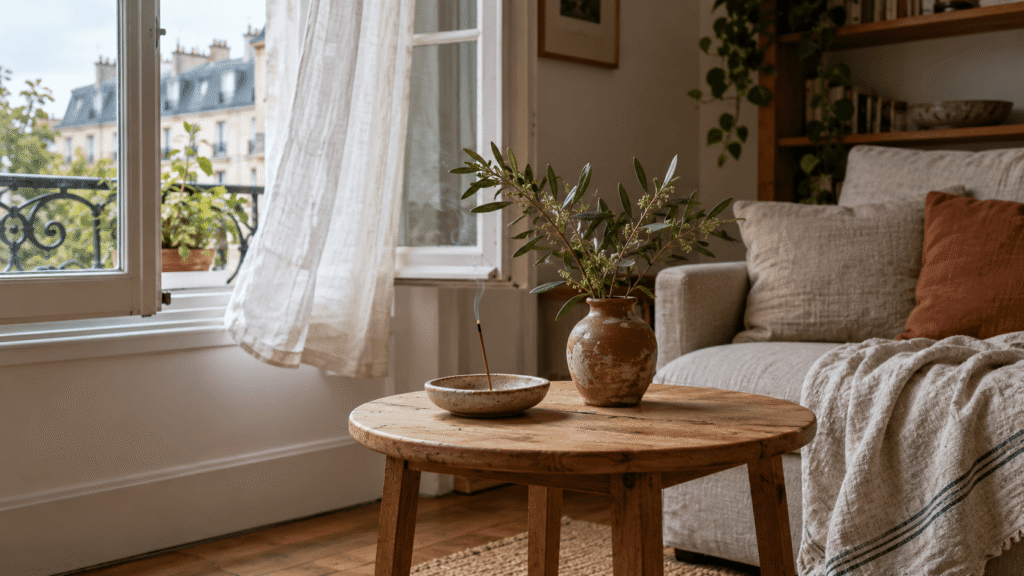
You can add music, incense or a favourite book, but you do not need to. Tea and a few uninterrupted minutes are enough.
A cup that belongs only to you
A slow tea ritual will not make your responsibilities disappear. The emails, laundry and half-finished plans will still be there when the cup is empty.
What it can offer is a small piece of time that does not need to be productive. A moment that is not preparation for the next thing.
Make the tea. Let it steep. Sit down while it is still warm.
For once, do not take it with you.